missing translation for 'onlineSavingsMsg'
Learn More
Learn More
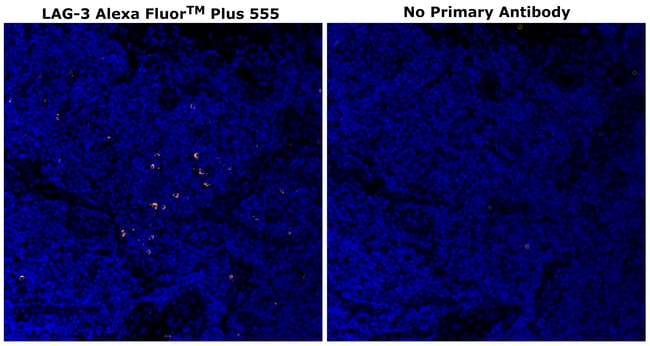
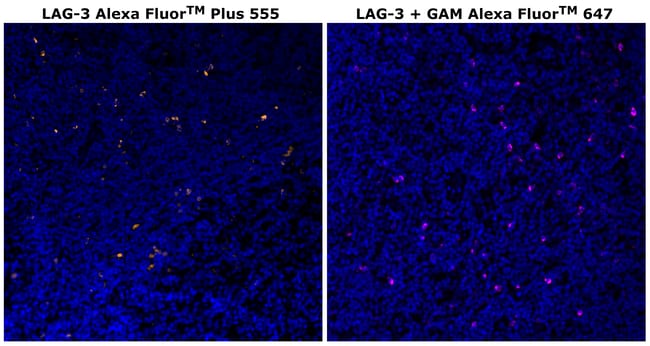
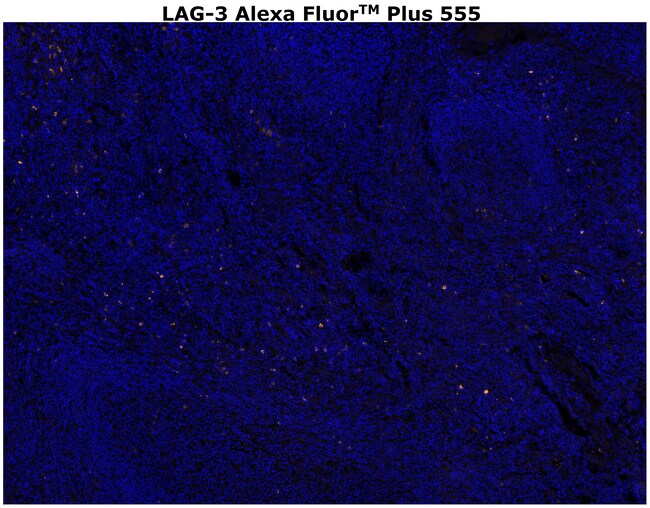
Invitrogen™ CD223 (LAG-3) Monoclonal Antibody (3DS223H), Alexa Fluor™ Plus 555
Mouse Monoclonal Antibody
Supplier: Invitrogen™ 754223994
Description
Description: This 3DS223H monoclonal antibody recognizes human CD223 also known as Lymphocyte Activation Gene 3 (LAG-3). LAG-3 is a 70-kDa surface glycoprotein belonging to the Ig superfamily with homology to CD4. LAG-3 binds to MHC class II with higher affinity than CD4 and is thought to be involved in the negative regulation of T cell activation and homeostatic proliferation. Surface expression of LAG-3 has been reported on activated T cells (including regulatory T cells) and NK cells. CD8+ T cells usually express LAG-3 at significantly higher levels than CD4+ T cells. Coexpression of LAG-3 and CD49b has been proposed to identify human and mouse Type 1 regulatory T cells (Tr1 cells). This 3DS223H antibody will recognize a formaldehyde-fixed epitope. Applications Tested: This 3DS223H antibody has been tested by immunohistochemistry on formalin-fixed paraffin embedded human tissue using high pH antigen retrieval and can be used at 5 μg/mL. It is recommended that the antibody be carefully titrated for optimal performance in the assay of interest. Using conjugate solutions: Centrifuge the protein conjugate solution briefly in a microcentrifuge before use; add only the supernatant to the experiment. This step will help eliminate any protein aggregates that may have formed during storage, thereby reducing nonspecific background staining.
LAG-3 is a 70-kDa surface glycoprotein in the immunoglobulin superfamily, with structural homology to CD4. It binds to MHC class II molecules with higher affinity than CD4 and is involved in the negative regulation of T cell activation and homeostatic proliferation. LAG-3 is expressed on the surface of activated T cells, including regulatory T cells, and NK cells. Notably, CD8+ T cells express LAG-3 at significantly higher levels than CD4+ T cells. Additionally, the coexpression of LAG-3 and CD49b has been proposed as a marker for identifying Type 1 regulatory T cells (Tr1 cells) in both humans and mice. This highlights LAG-3s role in immune regulation and its potential as a target for therapeutic interventions in immune-related conditions.Chemical Identifiers
| CD223 (LAG-3) | |
| 0.2 mg/mL | |
| Immunohistochemistry (Paraffin), Multiplex Immunohistochemistry | |
| Alexa Fluor Plus 555 | |
| Mouse | |
| RUO | |
| PBS with 0.5% BSA, 10% proprietary stabilizer and 0.05% sodium azide; pH 7.2 | |
| P18627 | |
| 3902 | |
| hCD223-FC PFA 4%. | |
| Antibody |
| 3DS223H | |
| 4°C, store in dark | |
| Monoclonal | |
| Liquid | |
| IgG1 κ | |
| Human | |
| LAG3 | |
| Activation-induced cytidine deaminase-linked autoimmunity protein; Aida; CD223; FDC; LAG3; LAG-3; Ly66; lymphocyte activating 3; lymphocyte activation gene 3 protein; lymphocyte-activation gene 3; Secreted lymphocyte activation gene 3 protein; sLAG 3; sLAG3; sLAG-3; soluble LAG 3lymphocyte activating 3; soluble LAG3 | |
| LAG3 | |
| Primary | |
| Affinity chromatography |
Specifications
| CD223 (LAG-3) | |
| Monoclonal | |
| 0.2 mg/mL | |
| PBS with 0.5% BSA, 10% proprietary stabilizer and 0.05% sodium azide; pH 7.2 | |
| P18627 | |
| LAG3 | |
| hCD223-FC PFA 4%. | |
| 500 μL | |
| Primary | |
| Human | |
| Antibody | |
| IgG1 κ |
| Immunohistochemistry (Paraffin), Multiplex Immunohistochemistry | |
| 3DS223H | |
| Alexa Fluor Plus 555 | |
| LAG3 | |
| Activation-induced cytidine deaminase-linked autoimmunity protein; Aida; CD223; FDC; LAG3; LAG-3; Ly66; lymphocyte activating 3; lymphocyte activation gene 3 protein; lymphocyte-activation gene 3; Secreted lymphocyte activation gene 3 protein; sLAG 3; sLAG3; sLAG-3; soluble LAG 3lymphocyte activating 3; soluble LAG3 | |
| Mouse | |
| Affinity chromatography | |
| RUO | |
| 3902 | |
| 4°C, store in dark | |
| Liquid |