missing translation for 'onlineSavingsMsg'
Learn More
Learn More
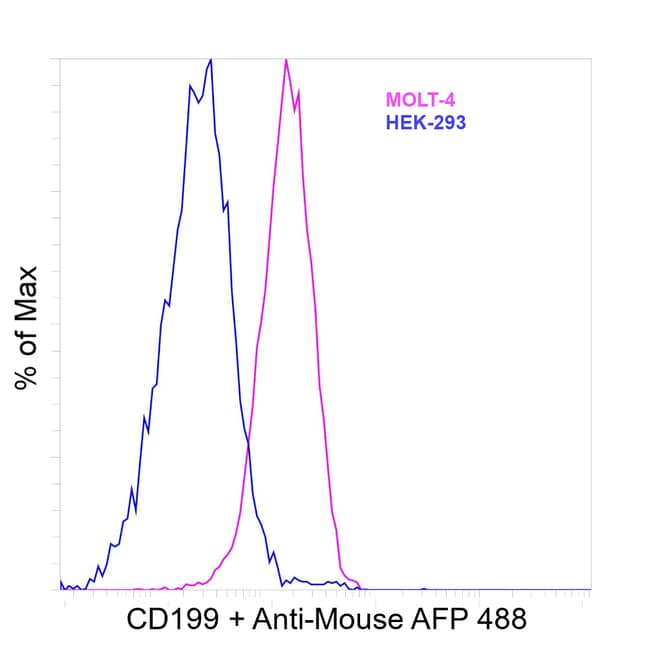
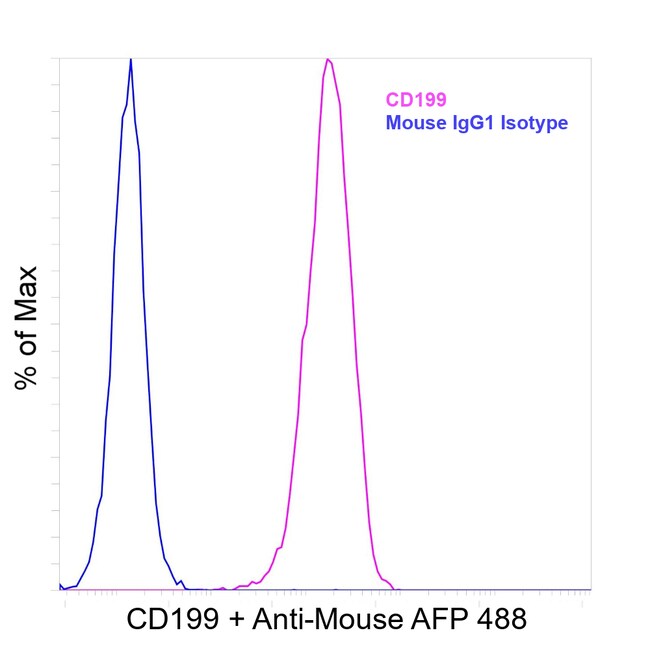
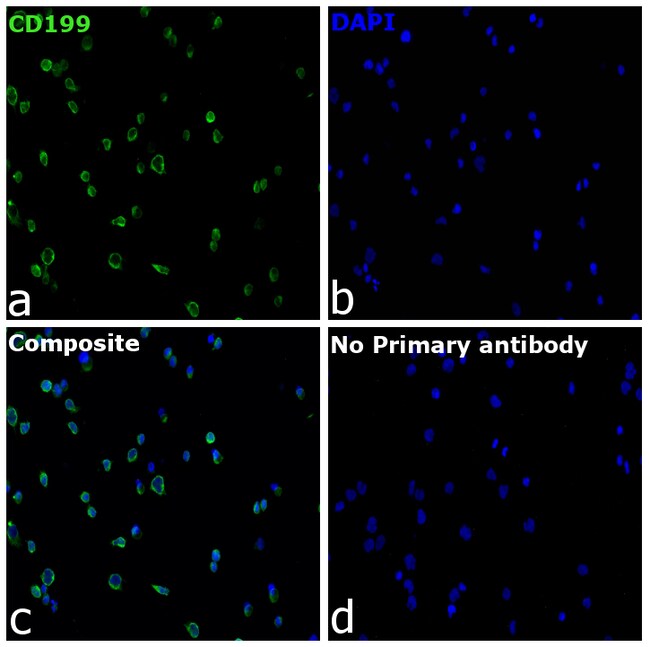
Invitrogen™ CD199 (CCR9) Recombinant Mouse Monoclonal Antibody (BBC3M4)
Description
Recombinant mouse monoclonal antibodies are produced using in vitro expression systems. Recombinant antibodies are produced using specific genes that code for the desired antibodies. These genes are cloned into an expression vector and expressed in vitro. The advantages of recombinant antibodies include better specificity and lot-to-lot consistency. It is recommended that the antibody be carefully titrated for optimal performance in the assay of interest.
The protein encoded by this gene is a member of the beta chemokine receptor family. It is predicted to be a seven transmembrane protein similar to G protein-coupled receptors. Chemokines and their receptors are key regulators of the thymocytes migration and maturation in normal and inflammation conditions. The specific ligand of this receptor is CCL25. It has been found that this gene is differentially expressed by T lymphocytes of small intestine and colon, suggested a role in the thymocytes recruitment and development that may permit functional specialization of immune responses in different segment of the gastrointestinal tract. This gene is mapped to the chemokine receptor gene cluster region. Two alternatively spliced transcript variants have been described.
Specifications
Specifications
| Antigen | CD199 (CCR9) |
| Applications | Flow Cytometry, Immunocytochemistry |
| Classification | Recombinant Monoclonal |
| Clone | BBC3M4 |
| Concentration | 1.0 mg/mL |
| Conjugate | Unconjugated |
| Formulation | PBS with 0.09% sodium azide; pH 7.2-7.4 |
| Gene | Ccr9 |
| Gene Accession No. | P51686 |
| Gene Alias | A130091K22Rik; C-C chemokine receptor type 9; C-C CKR-9; C-C motif chemokine receptor 9; CC-CKR-9; Ccr9; CCR-9; CDw199; CDw199 antigen; chemokine (C-C motif) receptor 9; chemokine C-C receptor 10; Cmkbr10; G protein-coupled receptor 28; GPR28; GPR-9-6; G-protein coupled receptor 28 |
| Show More |