Learn More
Invitrogen™ CD196 (CCR6) Monoclonal Antibody (R6H1), eBioscience™, Invitrogen™

Description
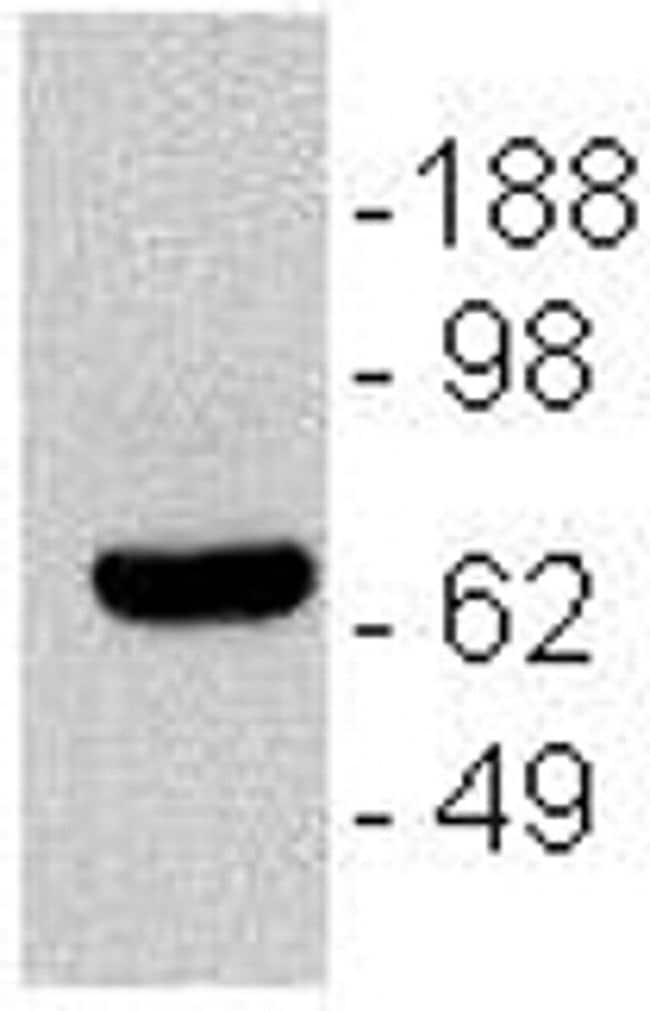
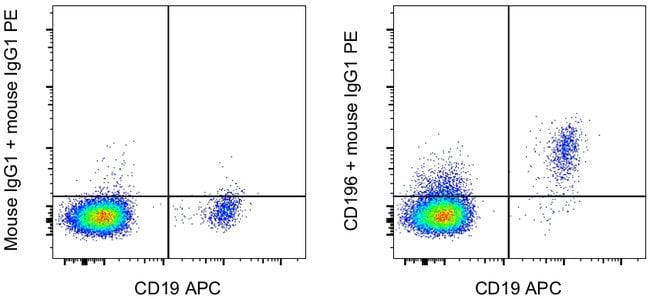
Description: This R6H1 monoclonal antibody reacts with CD196 (also known as CCR6), a seven transmembrane G protein-coupled receptor expressed on T, B, dendritic, natural killer, and Langerhans cells. This CC chemokine receptor uniquely binds MIP-3a/CCL20, a chemoattractant for dendritic cells, effector/memory T cells, and B cells. CD196 is also involved in host defense and inflammation at epithelial sites. Furthermore, this receptor has been implicated in Th17 differentiation and CD4+FoxP3+ regulatory T cell development. Applications Reported: This R6H1 antibody has been reported for use in flow cytometric analysis, immunoblotting (WB), and immunoprecipitation. Applications Tested: This R6H1 antibody has been tested by western blot on lysates prepared from normal human peripheral blood cells. This antibody can be used at less than or equal to 5 μg/mL. Purity: Greater than 90%, as determined by SDS-PAGE. Aggregation: Less than 10%, as determined by HPLC. Filtration: 0.2 μm post-manufacturing filtered.
Specifications
Specifications
| Antigen | CD196 (CCR6) |
| Applications | Flow Cytometry, Immunoprecipitation, Western Blot |
| Classification | Monoclonal |
| Clone | R6H1 |
| Concentration | 0.5 mg/mL |
| Conjugate | Unconjugated |
| Formulation | PBS with 0.09% sodium azide; pH 7.2 |
| Gene | CCR6 |
| Gene Accession No. | P51684 |
| Gene Alias | BN-1; CC chemokine receptor 6; C-C chemokine receptor type 6; C-C CKR-6; C-C motif chemokine receptor 6; CC-CKR-6; CCR6; CCR-6; CD196; chemokine (C-C motif) receptor 6; chemokine (C-C) receptor 6; chemokine receptor-like 3; CKR6; CKRL3; CKR-L3; Cmkbr6; DCR2; DRY6; DRY-6; G protein-coupled receptor 29; GPR29; GPRCY4; GPR-CY4; G-protein coupled receptor 29; KY411; LARC receptor; seven-transmembrane receptor, lymphocyte, 22; STRL22 |
| Show More |
For Research Use Only.