missing translation for 'onlineSavingsMsg'
Learn More
Learn More
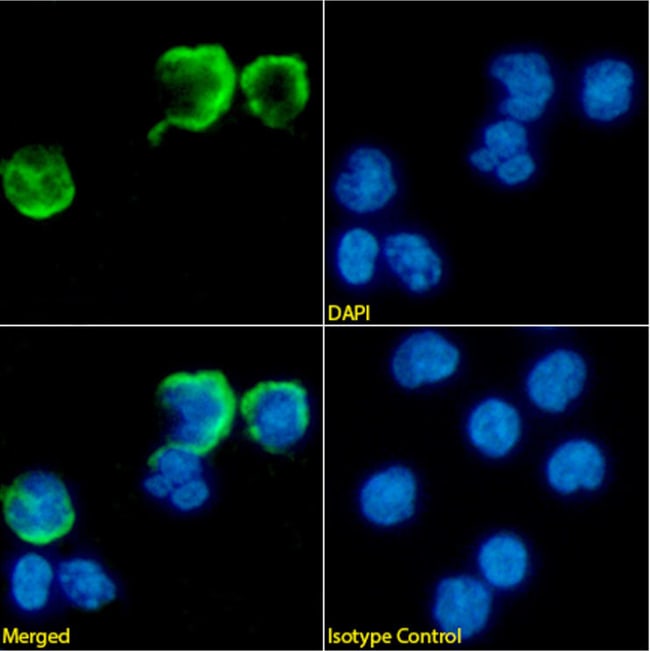
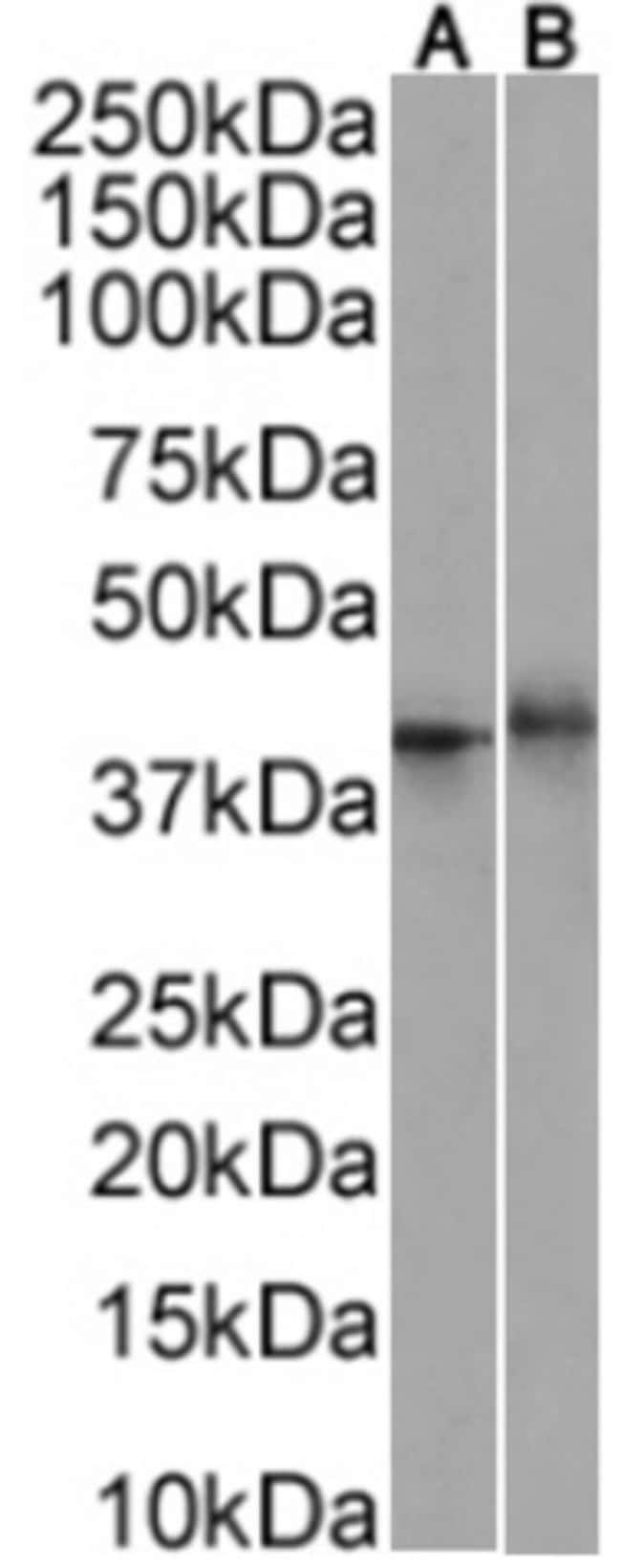
Invitrogen™ CD137 Chimeric Recombinant Rabbit Monoclonal Antibody (BBK4)

Description
This antibody is specific for human CD137.
CD137, also known as TNFRSF9 or 4-1BB, is an inducible costimulatory molecule expressed mainly on activated T cells. Its ligand, known as 4-1BBL, is expressed on activated macrophages, mature B cells, hematopoietic stem cells, and myeloid progenitor cells. CD137 signaling leads to maintaining the survival of activated T cells and CD8+ memory T cells, and clonal expansion of T cells, but also to suppressing myelopoiesis and dendritic cell development. Triggered CD137 induces a cytokine release profile regulating peripheral monocyte survival. Soluble forms of CD137 may provide negative control mechanism for some immune responses.
Specifications
Specifications
| Antigen | CD137 Chimeric |
| Applications | ELISA, Flow Cytometry, Functional Assay, Western Blot, Immunocytochemistry |
| Classification | Recombinant Monoclonal |
| Clone | BBK4 |
| Concentration | 1 mg/mL |
| Conjugate | Unconjugated |
| Formulation | PBS with 0.02% ProClin 300 |
| Gene | TNFRSF9 |
| Gene Accession No. | Q07011 |
| Gene Alias | 4 1 BB; 41BB; 4-1BB; 4-1BB ligand receptor; A930040I11Rik; AA408498; AI325004; Cd137; CD137 antigen; CDw137; EGK_00183; homolog of mouse 4-1BB; ILA; induced by lymphocyte activation (ILA); interleukin-activated receptor, homolog of mouse Ly63; Ly63; receptor protein 4-1BB; s4 1 BB; s4 1BB; s41BB; sCD137; secreted CD137 antigen; soluble 4 1 BB; soluble 4 1BB; soluble 41BB; soluble CD137; T cell antigen ILA; T-cell antigen 4-1BB; T-cell antigen 4-1BB homolog; T-cell antigen ILA; TNF receptor superfamily member 9; TNFRSF9; Tumor necrosis factor receptor superfamily member 9; tumor necrosis factor receptor superfamily, member 9 |
| Show More |