missing translation for 'onlineSavingsMsg'
Learn More

Invitrogen™ CD10 Monoclonal Antibody (eBioCB-CALLA (CB-CALLA)), eBioscience™, Invitrogen™

Catalog No. 14010637
Encompass
Change view
Click to view available options
Quantity:
2 mg
1 product options available for selection
Product selection table with 1 available options. Use arrow keys to navigate and Enter or Space to select.
Catalog No. Quantity
14010637 2 mg
Use arrow keys to navigate between rows. Press Enter or Space to select a product option. 1 options available.
1 options
Catalog No. 14010637 Supplier Invitrogen™ Supplier No. 14010637
Only null left

Mouse Monoclonal Antibody

The eBioCB-CALLA MAb recognizes human CD10 (CALLA, NEP, enkephalinase, Neprilysin), which is a 100 kDa, type II cell surface glycoprotein originally identified for its expression on most acute lymphoblastic leukemias (ALL). Subsequently, CD10 was shown to be the same molecule as the neutral endopeptidase (NEP), or KII-NA. CD10 is a Zn2+-dependent metallo-peptidase with endothelin, glucagon, gastrin, neurotensin and bradykinin included among its substrates. CD10 is involved in the regulation of chemotactic and inflammatory processes involving neutrophils. In B cells, CD10 regulates stromal cell-dependent B lymphopoiesis and expression has also been reported on mature B cells in germinal centres. In addition to the hematopoietic compartment, other major sites of CD10 expression are the brush border of enterocytes and renal tubules and glomeruli. There is partial blocking of the eBioCB-CALLA and MEM-78 monoclonal antibodies indicating that they recognize similar epitopes.

CD10, also known as the Common Acute Lymphocytic Leukemia Antigen (CALLA) and neutral endopeptidase (NEP), is a Zn2+-dependent metallo-peptidase with neutral metalloendopeptidase activity. It is a 100 kDa type II transmembrane glycoprotein encoded by a gene that exists in a single copy of greater than 45 kb. The 5' untranslated region of the CD10 gene is alternatively spliced, resulting in four separate mRNA transcripts, although the coding region remains unaffected by alternative splicing. CD10 is involved in the regulation of chemotactic and inflammatory processes involving neutrophils and plays a role in stromal cell-dependent B lymphopoiesis. It is expressed on immature B cells in adult bone marrow, mature B cells in germinal centers, and cells from patients with chronic myelocytic leukemia (CML). Additionally, CD10 is present on the cells of lymphoblastic, Burkitt's, and follicular germinal center lymphomas. Beyond the hematopoietic compartment, CD10 is highly expressed on the brush border of enterocytes and renal tubules and glomeruli, as well as on breast myoepithelial cells, bile canaliculi, and fibroblasts. CD10 cleaves peptides at the amino side of hydrophobic residues, inactivating several biologically active peptides, including endothelin, glucagon, gastrin, neurotensin, bradykinin, enkephalins, substance P, oxytocin, and others. Diseases associated with CD10 dysfunction include spinocerebellar ataxia 43 and Charcot-Marie Tooth Disease, highlighting its significance in both normal physiological processes and disease states.

Specifications

Antigen CD10
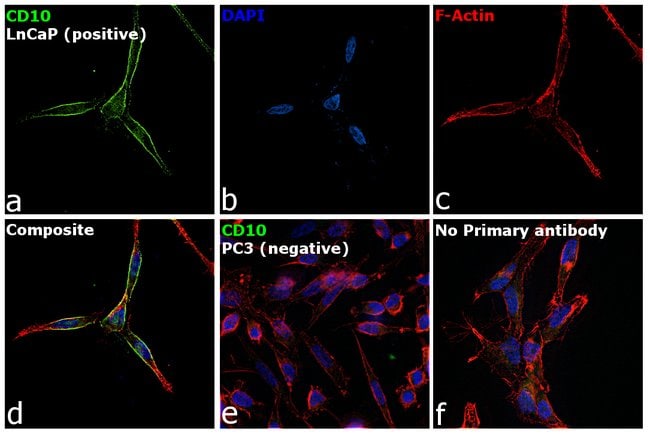
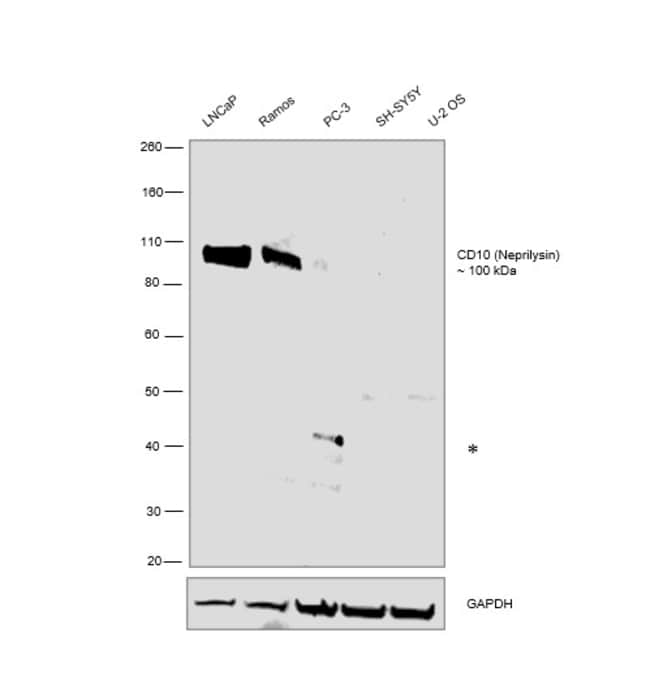
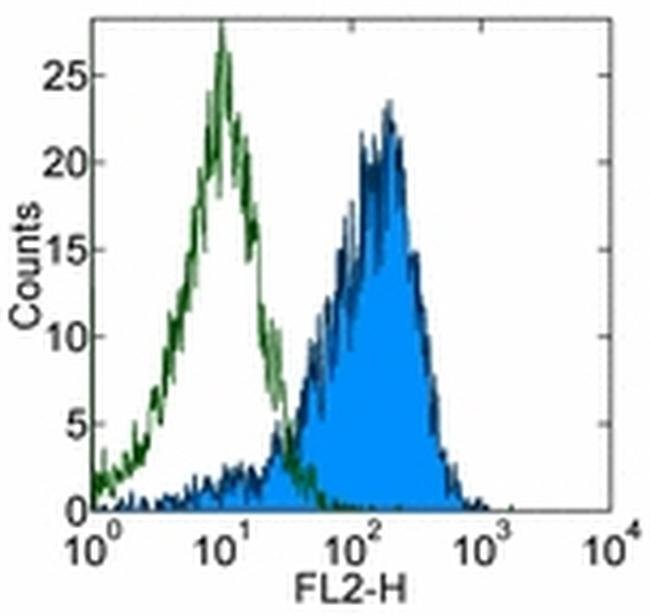
Applications Flow Cytometry, Western Blot, Immunocytochemistry
Classification Monoclonal
Clone eBioCB-CALLA (CB-CALLA)
Concentration 0.5 mg/mL
Conjugate Unconjugated
Formulation PBS with 0.09% sodium azide; pH 7.2
Gene Mme
Gene Accession No. P08473
Gene Alias 6030454K05Rik; Atriopeptidase; C85356; CALLA; CD10; CMT2T; common acute lymphoblastic leukemia antigen; common acute lymphocytic leukemia antigen; Enkephalinase; EPN; membrane metallo endopeptidase; membrane metalloendopeptidase; membrane metallo-endopeptidase; membrane metallo-endopeptidase (neutral endopeptidase, enkephalinase, CALLA, CD10); membrane metallo-endopeptidase (neutral endopeptidase/enkephalinase); membrane metallo-endopeptidase variant 1; membrane metallo-endopeptidase variant 2; MME; NEP; neprilysin; neprilysin-390; neprilysin-411; neutral endopeptidase 24.11; SFE; Skin fibroblast elastase
Gene Symbols Mme
Host Species Mouse
Purification Method Affinity chromatography
Quantity 2 mg
Regulatory Status RUO
Primary or Secondary Primary
Gene ID (Entrez) 4311
Target Species Human
Content And Storage 4°C
Product Type Antibody
Form Liquid
Isotype IgG2b κ
Show More Show Less