missing translation for 'onlineSavingsMsg'
Learn More
Learn More
Invitrogen™ CCR10 Polyclonal Antibody

Description
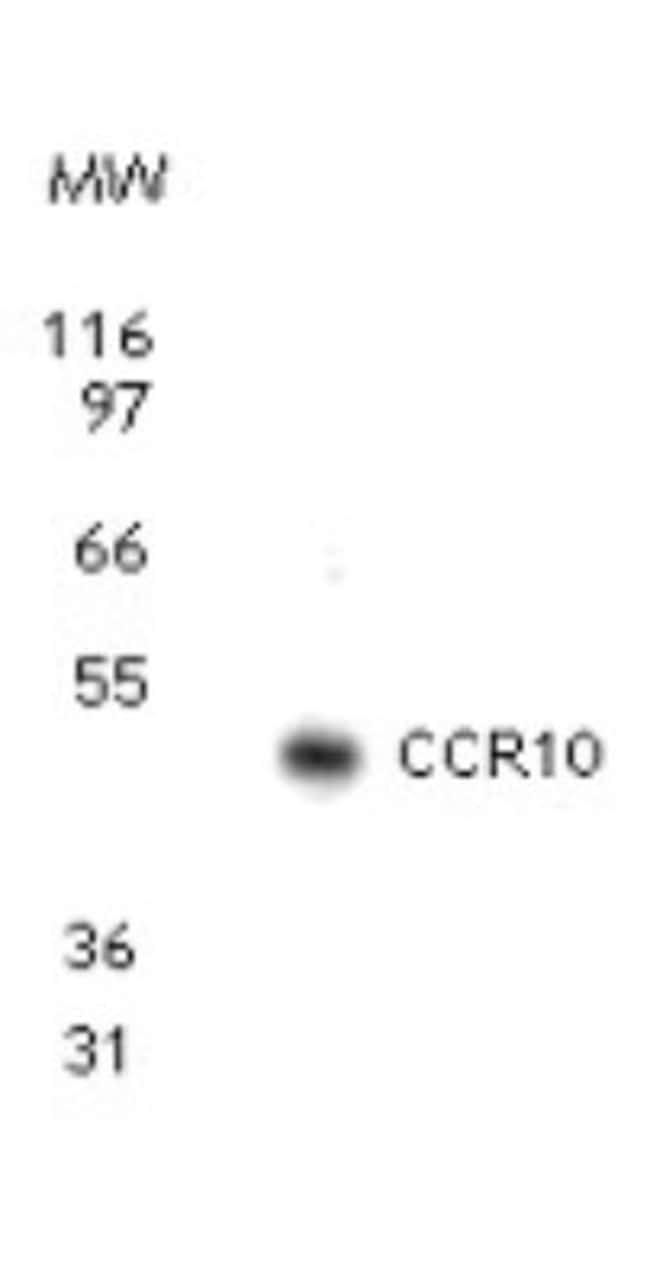
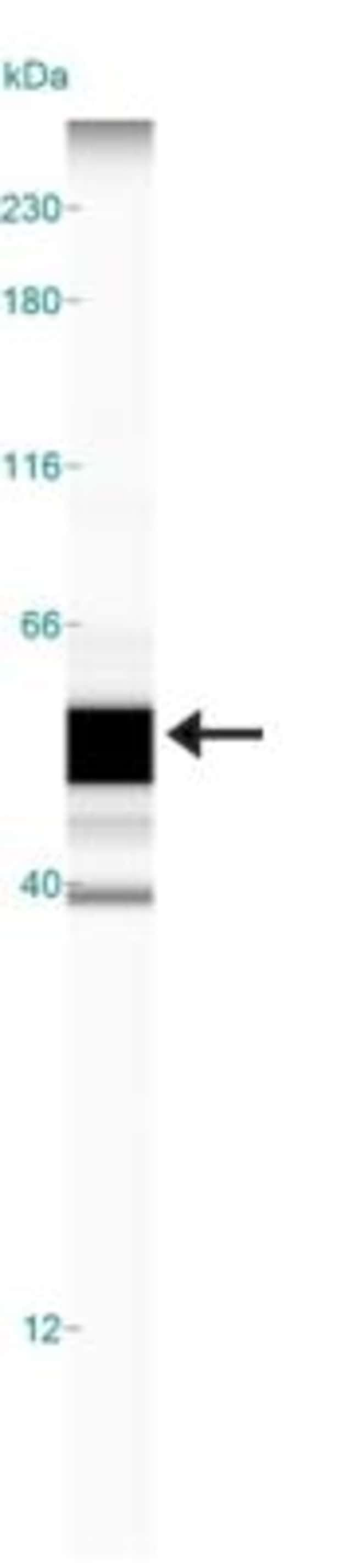
The immunogen sequence is 100% identical in human and mouse. Suggested positive control: A-375 or MCF-7, antigen standard for CCR10 (transient overexpression lysate).
Chemokines are a group of small (approximately 8 to 14 kD), mostly basic, structurally related molecules that regulate cell trafficking of various types of leukocytes through interactions with a subset of 7-transmembrane, G protein-coupled receptors. Chemokines also play fundamental roles in the development, homeostasis, and function of the immune system, and they have effects on cells of the central nervous system as well as on endothelial cells involved in angiogenesis or angiostasis. Chemokines are divided into 2 major subfamilies, CXC and CC, based on the arrangement of the first 2 of the 4 conserved cysteine residues; the 2 cysteines are separated by a single amino acid in CXC chemokines and are adjacent in CC chemokines. CCR10 is the receptor for CCL27; CCR10-CCL27 interactions are involved in T cell-mediated skin inflammation.
Specifications
Specifications
| Antigen | CCR10 |
| Applications | Flow Cytometry, Western Blot |
| Classification | Polyclonal |
| Concentration | 0.5 mg/mL |
| Conjugate | Unconjugated |
| Formulation | PBS with 0.2% BSA and 0.05% sodium azide |
| Gene | CCR10 |
| Gene Accession No. | P46092 |
| Gene Alias | CC chemokine receptor 10; C-C chemokine receptor type 10; C-C CKR-10; C-C motif chemokine receptor 10; CC-CKR-10; CCR10; CCR-10; chemokine (C-C motif) receptor 10; chemokine C-C receptor 9; Cmkbr9; G protein-coupled receptor 2; Gpr2; G-protein coupled receptor 2; MGC151420; RP23-281C18.3 |
| Gene Symbols | CCR10 |
| Show More |