missing translation for 'onlineSavingsMsg'
Learn More
Learn More
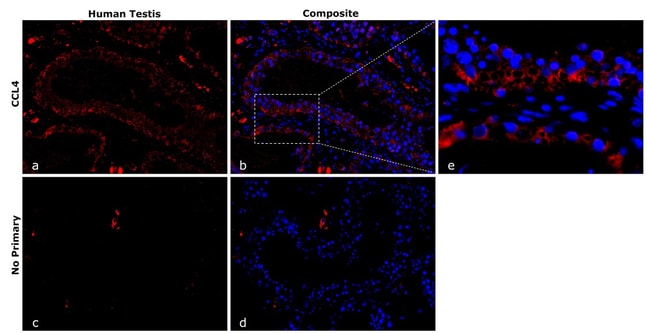
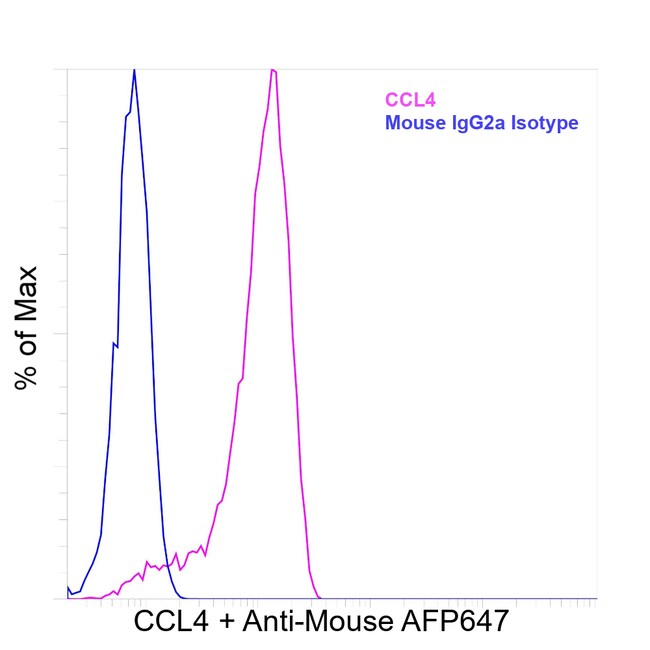
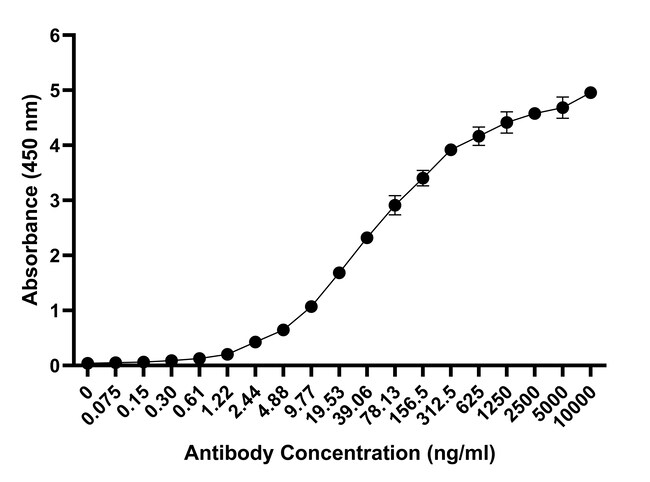
Invitrogen™ CCL4 (MIP-1 beta) Recombinant Mouse Monoclonal Antibody (FL34Z3L)
Description
Recombinant mouse monoclonal antibodies are produced using in vitro expression systems. Recombinant antibodies are produced using specific genes that code for the desired antibodies. These genes are cloned into an expression vector and expressed in vitro. The advantages of recombinant antibodies include better specificity and lot-to-lot consistency. It is recommended that the antibody be carefully titrated for optimal performance in the assay of interest.
CCL4 (macrophage inflammatory protein 1-beta, MIP1B) belongs to the intercrine beta (chemokine CC) family. Functionally, CCL4 is involved in chemotactic and proinflammatory effects, and homeostasis. CCL4 is produced by macrophages upon stimulation by bacterial endotoxins. CCL4 recruits and stimulates various inflammatory cells at sites of inflammation. CCL4 is produced by lymphocytes, macrophages and dendritic cells. Both CCL4 and the related protein CCL3 participate in the host response to invading bacterial, viral, parasite and fungal pathogens by regulating the trafficking and activation state of selected subgroups of inflammatory cells. While both CCL4 and CCL3 exert similar effects on monocytes, their effect on lymphocytes differ, with CCL4 selectively attracting CD4+ lymphocytes and CCL3 selectively attracting CD8+ lymphocytes. Additionally, both have been shown to be potent chemoattractants for B cells, eosinophils and dendritic cells. The processed form of CCL4 can induce down-modulation of surface expression of the chemokine receptor CCR5, thus inhibiting the CCR5-mediated entry of HIV-1 in T cells. CCL4 binds with high affinity to CCR5 receptors.
Specifications
Specifications
| Antigen | CCL4 (MIP-1 beta) |
| Applications | ELISA, Flow Cytometry, Immunohistochemistry (Paraffin) |
| Classification | Recombinant Monoclonal |
| Clone | FL34Z3L |
| Concentration | 1.0 mg/mL |
| Conjugate | Unconjugated |
| Formulation | PBS with 0.09% sodium azide; pH 7.2-7.4 |
| Gene | CCL4 |
| Gene Accession No. | P13236 |
| Gene Alias | ACT2; ACT-2; AT744.1; CC chemokine ligand 4; C-C motif chemokine 4; C-C motif chemokine ligand 4; Ccl4; chemokine (C-C motif) ligand 4; G-26; G-26 T-lymphocyte-secreted protein; HC21; immune activation gene 2; immune activation gene-2; immune activation protein 2; LAG1; LAG-1; Lymphocyte activation gene 1 protein; macrophage inflammatory protein 1-beta; macrophage inflammatory protein-1 beta; MGC104418; MGC126025; MGC126026; MIP-1 beta; MIP1b; MIP-1B; Mip1-b; MIP1B1; MIP1beta; MIP-1BETA; MIP-1-beta; MIP1-beta; MIP-1-beta(1-69); MIP-1-beta(3-69); PAT 744; Protein H400; putative MIP-1beta protein; RP23-320E6.8; SCY4A; SCYA2; Scya4; secreted protein G-26; SIS-gamma; small inducible cytokine A4; small inducible cytokine A4 (homologous to mouse Mip-1b); small-inducible cytokine A4; T-cell activation protein 2 |
| Show More |