missing translation for 'onlineSavingsMsg'
Learn More
Learn More
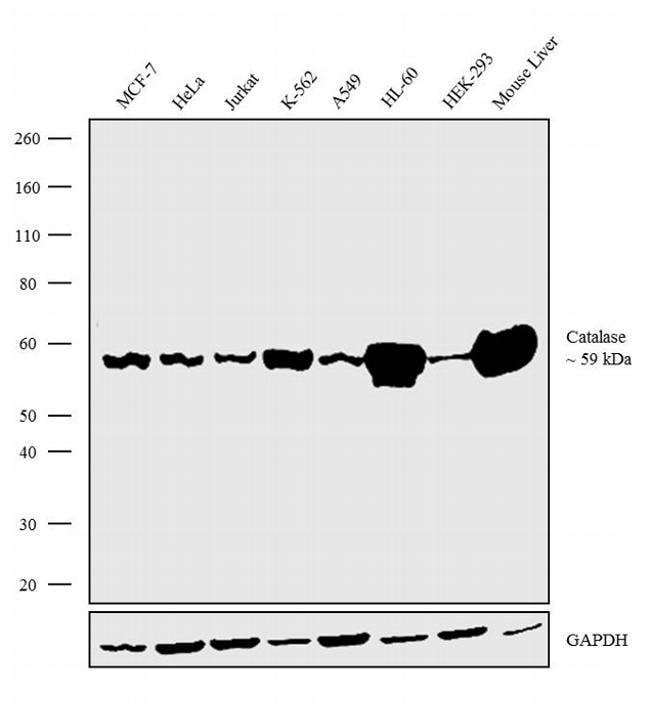
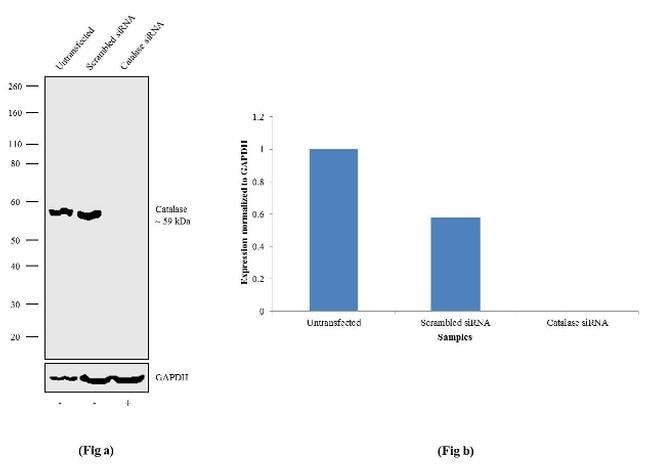
Invitrogen™ Catalase Recombinant Rabbit Monoclonal Antibody (3H3L29)

Description
This antibody predicted to react with Monkey, Bovine, Pig, Sheep Recombinant rabbit monoclonal antibodies are produced using in vitro expression systems. The expression systems are developed by cloning in the specific antibody DNA sequences from immunoreactive rabbits. Then, individual clones are screened to select the best candidates for production. The advantages of using recombinant rabbit monoclonal antibodies include: better specificity and sensitivity, lot-to-lot consistency, animal origin-free formulations, and broader immunoreactivity to diverse targets due to larger rabbit immune repertoire.
Catalase is a homotetrameric heme-containing enzyme present within the matrix of all peroxisomes. It carries out a dismutation reaction in which hydrogen peroxide is converted to water and oxygen. Human catalase has the last four amino acids (-KANL) at the extreme C-terminus for peroxisome targeting. The monomer of human catalase is 61.3 kDa in molecular size. Catalase has been implicated as an important factor in inflammation, mutagenesis, prevention of apoptosis, and stimulation of a wide spectrum of tumors. Loss of catalase leads to the human genetic disease, acatalasemia, or Takahara's disease.
Specifications
Specifications
| Antigen | Catalase |
| Chemical Name or Material | Silver Nitrate |
| Applications | Western Blot |
| CAS | 7761-88-8 |
| Classification | Recombinant Monoclonal |
| Clone | 3H3L29 |
| Concentration | 0.5 mg/mL |
| Conjugate | Unconjugated |
| Formulation | PBS with 0.09% sodium azide; pH 7.2-7.4 |
| Gene | Cat |
| Show More |