missing translation for 'onlineSavingsMsg'
Learn More
Learn More
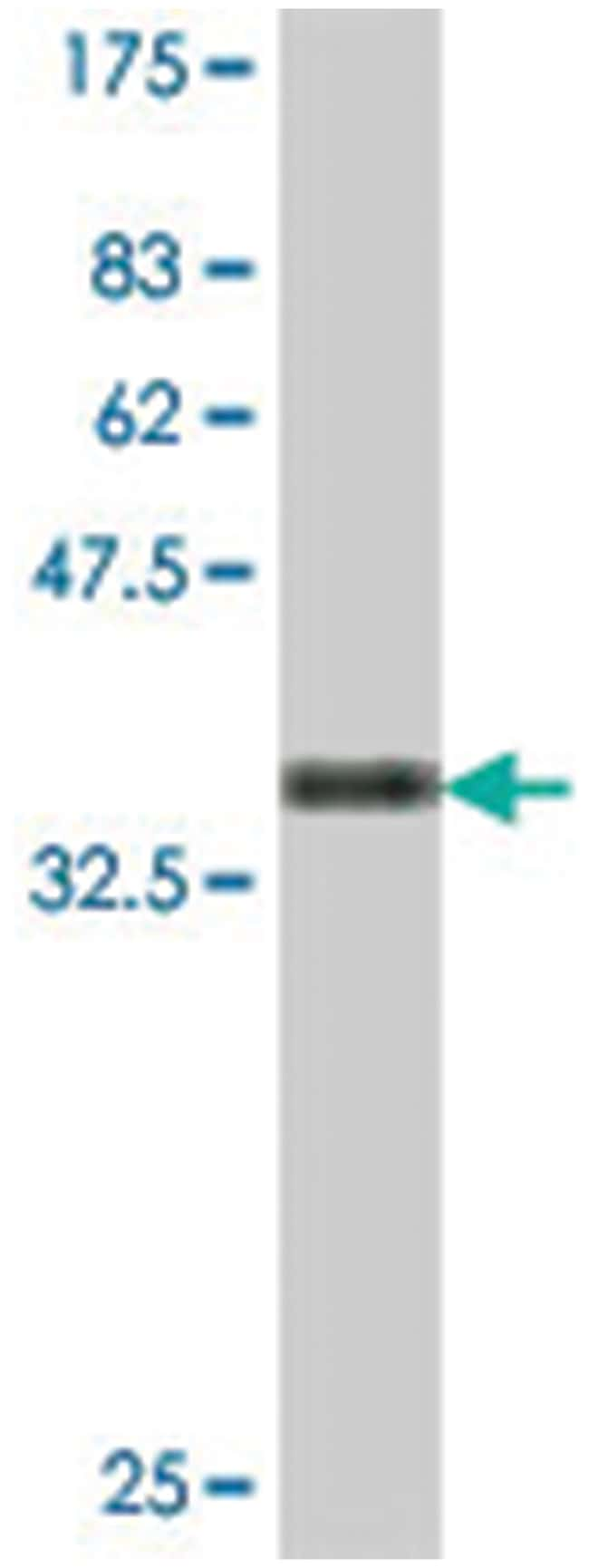
ENC1, Mouse, Polyclonal Antibody, Abnova™
Mouse polyclonal antibody raised against a partial recombinant ENC1.
Supplier: Abnova Corporation H00008507A01
Description
DNA damage and/or hyperproliferative signals activate wildtype p53 tumor suppressor protein (TP53; MIM 191170), inducing cell cycle arrest or apoptosis. Mutations that inactivate p53 occur in 50% of all tumors. Polyak et al. (1997) [PubMed 9305847] used serial analysis of gene expression (SAGE) to evaluate cellular mRNA levels in a colorectal cancer cell line transfected with p53. Of 7,202 transcripts identified, only 14 were expressed at levels more than 10-fold higher in p53-expressing cells than in control cells. Polyak et al. (1997) [PubMed 9305847] termed these genes 'p53-induced genes,' or PIGs, several of which were predicted to encode redox-controlling proteins. They noted that reactive oxygen species (ROS) are potent inducers of apoptosis. Flow cytometric analysis showed that p53 expression induces ROS production, which increases as apoptosis progresses under some conditions. The authors stated that the PIG10 gene, also called ENC1, encodes an actin-binding protein.[supplied by OMIM
Sequence: SINIYLFHKSSYADSVLTHLNLLRQQRLFTDVLLHAGNRTFPCHRAVLAACSRYFEAMFSGGLKESQDSEVNFDNSIHPEVLSpecifications
| ENC1 | |
| Polyclonal | |
| Mouse polyclonal antibody raised against a partial recombinant ENC1. | |
| ENC1 | |
| CCL28/ENC-1/FLJ39259/KLHL35/KLHL37/NRPB/PIG10/TP53I10 | |
| Mouse | |
| 50 μL | |
| Primary | |
| Human | |
| Liquid |
| ELISA, Western Blot | |
| Unconjugated | |
| 50% glycerol | |
| NM_003633 | |
| ENC1 | |
| ENC1 (NP_003624, 17 a.a. ∼ 98 a.a) partial recombinant protein with GST tag. | |
| RUO | |
| 8507 | |
| Store at -20°C or lower. Aliquot to avoid repeated freezing and thawing. |