missing translation for 'onlineSavingsMsg'
Learn More
Learn More
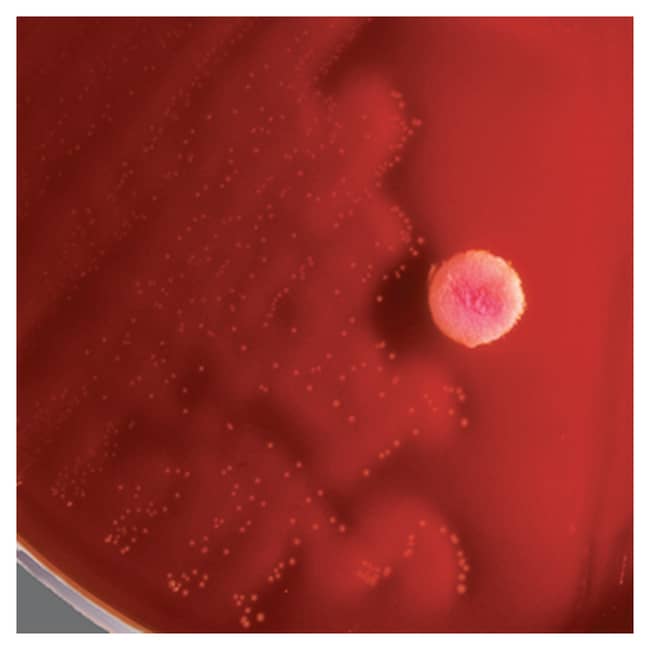
Thermo Scientific™ PYR/Esculin Disc
Presumptively identify Group A streptococci and enterococci using PYR/Esculin Disk.
Supplier: Thermo Scientific™ RE21138
Description
Rapidly, presumptively identify Group A streptococci and enterococci using reagent-impregnated Thermo Scientific™ Remel™ PYR/Esculin Disk. Ellner et al. described a colorimetric method for the PYR test using filter paper strips containing PYR substrate1. Using a rapid spot test, Edberg et al. demonstrated the hydrolysis of esculin to esculetin by utilizing the loss of fluorescence as an indicator of esculin hydrolysis2.
In 1981, Godsey et al. described a test to differentiate group A streptococci and enterococci from other streptococci based on their ability to cleave L-pyrrolidonyl-β-naphthylamide (PYR)3. In 1982, Facklam et al. used PYR test in conjunction with the CAMP and esculin hydrolysis tests to presumptively identify streptococci4,5.
- Ready to use - L-pyrrolidonyl-β-naphthylamide-impregnated disk
- Easy to interpret - With visual inspection
The enzyme pyrrolidonyl peptidase hydrolyzes the substrate L-pyrrolidonyl-β-naphthylamide (PYR) to produce β-naphthylamine. Following addition of N,N-dimethyl-aminocinnamaldehyde (PYR reagent) a red color is formed. Escuin is hydrolyzed at the β- glucose linkage to yield two products – esculetin and glucose. Esculin fluoresces under ultraviolet light at 360 nm, whereas the hydrolysis product esculetin fails to fluoresce. Both reactive substrates, PYR and esculin, are lyophilized in disk form for stability.
Specifications
| 2°C to 8°C | |
| PYR/Esculin Disk | |
| Vial | |
| 25 Disks/Vial |