missing translation for 'onlineSavingsMsg'
Learn More

ACROBiosystems Inc Biotinylated Human LAIR1 / CD305 Protein, His,Avitag™

Catalog No. 502719219
Encompass

Leukocyte-associated immunoglobulin-like receptor-1 (LAIR-1) is constitutively expressed on the majority of human peripheral blood mononuclear leukocytes. LAIR-1 or CD305 is a transmembrane glycoprotein with a single immunoglobulin-like domain and a cytoplasmic tail containing two immune receptor tyrosine-based inhibitory motifs. LAIR-1 recruits SHP-1 and SHP-2 phosphatases upon activation, and cross-linking of the LAIR-1 antigen on natural killer (NK) cells results in strong inhibition of NK cellmediated cytotoxicity. Functions as an inhibitory receptor that plays a constitutive negative regulatory role on cytolytic function of natural killer (NK) cells, B-cells and T-cells. Activation by Tyr phosphorylation results in recruitment and activation of the phosphatases PTPN6 and PTPN11. It also reduces the increase of intracellular calcium evoked by B-cell receptor ligation.Diseases associated with LAIR1 include Chronic Active Epstein-Barr Virus Infection and Palindromic Rheumatism.
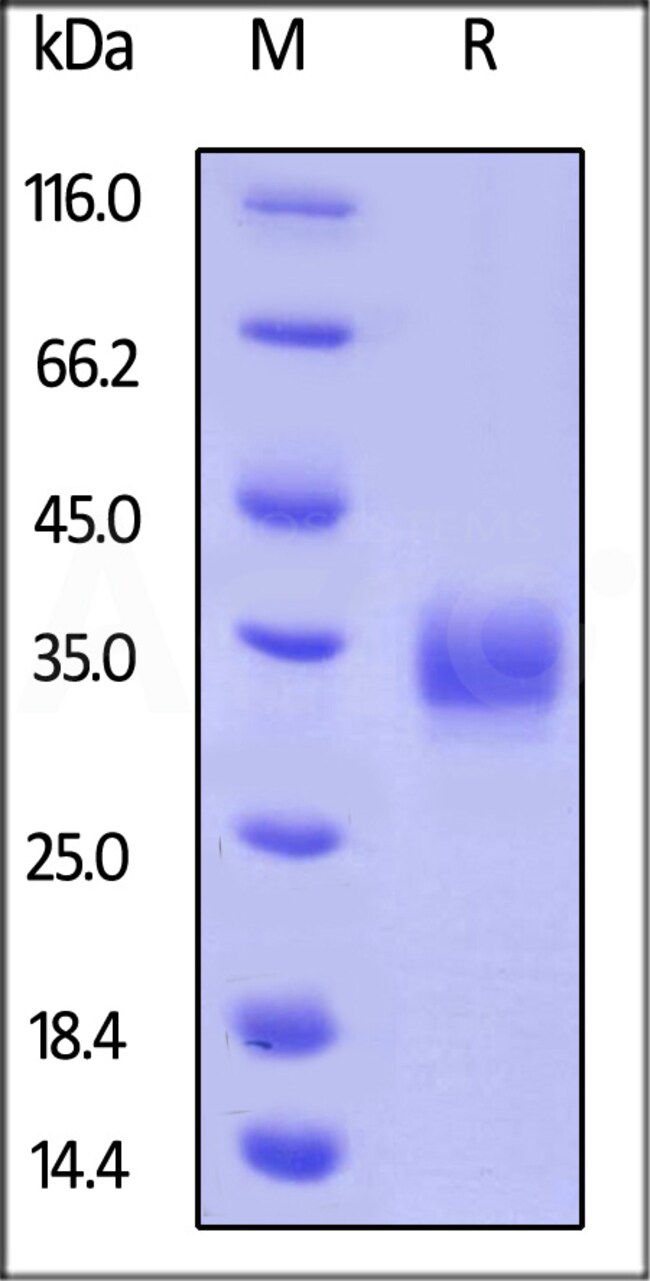
Catalog No. 502719219 Supplier ACROBiosystems Inc Supplier No. LA1H82E3200UG

Please call Customer Service at 1-800-234-7437 or send an email to help@thermofisher.com for assistance.

Leukocyte-associated immunoglobulin-like receptor-1 (LAIR-1) is constitutively expressed on the majority of human peripheral blood mononuclear leukocytes. LAIR-1 or CD305 is a transmembrane glycoprotein with a single immunoglobulin-like domain and a cytoplasmic tail containing two immune receptor tyrosine-based inhibitory motifs. LAIR-1 recruits SHP-1 and SHP-2 phosphatases upon activation, and cross-linking of the LAIR-1 antigen on natural killer (NK) cells results in strong inhibition of NK cellmediated cytotoxicity. Functions as an inhibitory receptor that plays a constitutive negative regulatory role on cytolytic function of natural killer (NK) cells, B-cells and T-cells. Activation by Tyr phosphorylation results in recruitment and activation of the phosphatases PTPN6 and PTPN11. It also reduces the increase of intracellular calcium evoked by B-cell receptor ligation.Diseases associated with LAIR1 include Chronic Active Epstein-Barr Virus Infection and Palindromic Rheumatism.