missing translation for 'onlineSavingsMsg'
Learn More

ACROBiosystems Inc Biotinylated Human IL-1 alpha / IL-1F1 Protein, His,Avitag™ (MALS verified)

Catalog No. 502719300
Encompass

Interleukin-1 alpha (IL1a) is also known as IL-1A, IL1, IL1-ALPHA,IL1F1,and is a cytokine of the interleukin-1 family. IL1a possesses a wide spectrum of metabolic, physiological, haematopoietic activities, and plays one of the central roles in the regulation of the immune responses. It binds to the interleukin-1 receptor. IL-1 is constitutively produced by epithelial cells. It is found in substantial amounts in normal human epidermis and is distributed in a 1:1 ratio between living epidermal cells and stratum corneum.The constitutive production of large amounts of IL-1 precursor by healthy epidermal keratinocytes interfere with the important role of IL-1 in immune responses, assuming skin as a barrier, which prevents the entry of pathogenic microorganisms into the body. In vitro, IL-1 possesses biological effect on cells in the picomolar to femtomolar range. In vivo, Shortly after an onset of an infection into organism, IL-1 activates a set of immune system response processes.
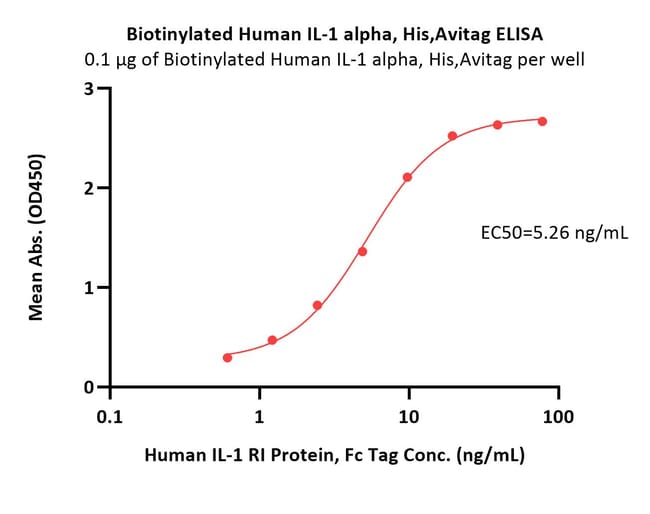
Catalog No. 502719300 Supplier ACROBiosystems Inc Supplier No. ILAH82E7200UG

Please call Customer Service at 1-800-234-7437 or send an email to help@thermofisher.com for assistance.

Interleukin-1 alpha (IL1a) is also known as IL-1A, IL1, IL1-ALPHA,IL1F1,and is a cytokine of the interleukin-1 family. IL1a possesses a wide spectrum of metabolic, physiological, haematopoietic activities, and plays one of the central roles in the regulation of the immune responses. It binds to the interleukin-1 receptor. IL-1 is constitutively produced by epithelial cells. It is found in substantial amounts in normal human epidermis and is distributed in a 1:1 ratio between living epidermal cells and stratum corneum.The constitutive production of large amounts of IL-1 precursor by healthy epidermal keratinocytes interfere with the important role of IL-1 in immune responses, assuming skin as a barrier, which prevents the entry of pathogenic microorganisms into the body. In vitro, IL-1 possesses biological effect on cells in the picomolar to femtomolar range. In vivo, Shortly after an onset of an infection into organism, IL-1 activates a set of immune system response processes.