missing translation for 'onlineSavingsMsg'
Learn More

ACROBiosystems Inc CHO/Human c-MET Stable Cell Line Development Service

Catalog No. 502718939
Encompass

Hepatocyte growth factor receptor (HGFR) is also known as mesenchymal-epithelial transition factor (MET), c-Met, and is a glycosylated receptor tyrosine kinase that plays a central role in epithelial morphogenesis and cancer development. HGFR protein possesses tyrosine-kinase activity. The primary single chain precursor protein is post-translationally cleaved to produce the alpha and beta subunits, which are disulfide linked to form the mature receptor. HGFR is normally expressed by cells of epithelial origin, while expression of HGF is restricted to cells of mesenchymal origin. Upon HGF stimulation, HGFR induces several biological responses that collectively give rise to a program known as invasive growth. Abnormal HGFR activation in cancer correlates with poor prognosis, where aberrantly active HGFR triggers tumor growth, formation of new blood vessels (angiogenesis) that supply the tumor with nutrients, and cancer spread to other organs (metastasis). HGFR is deregulated in many ty
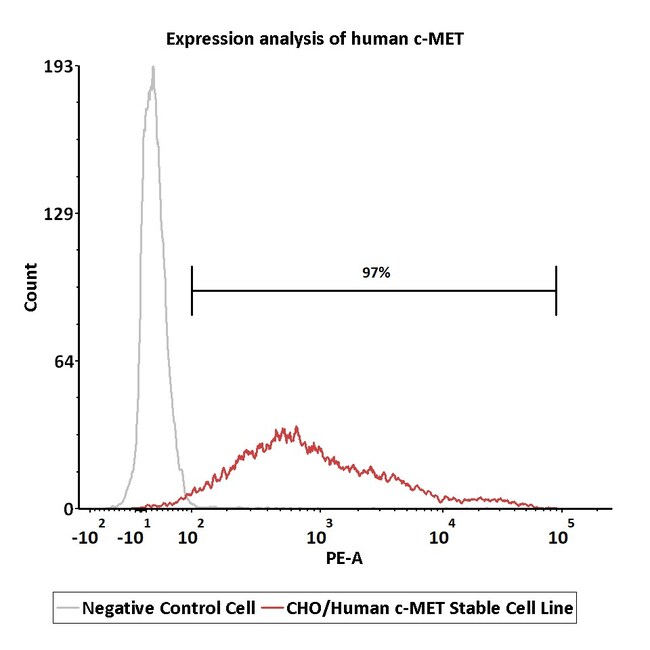
Catalog No. 502718939 Supplier ACROBiosystems Inc Supplier No. SCCHOATP1412VIALS

Please call Customer Service at 1-800-234-7437 or send an email to help@thermofisher.com for assistance.

Hepatocyte growth factor receptor (HGFR) is also known as mesenchymal-epithelial transition factor (MET), c-Met, and is a glycosylated receptor tyrosine kinase that plays a central role in epithelial morphogenesis and cancer development. HGFR protein possesses tyrosine-kinase activity. The primary single chain precursor protein is post-translationally cleaved to produce the alpha and beta subunits, which are disulfide linked to form the mature receptor. HGFR is normally expressed by cells of epithelial origin, while expression of HGF is restricted to cells of mesenchymal origin. Upon HGF stimulation, HGFR induces several biological responses that collectively give rise to a program known as invasive growth. Abnormal HGFR activation in cancer correlates with poor prognosis, where aberrantly active HGFR triggers tumor growth, formation of new blood vessels (angiogenesis) that supply the tumor with nutrients, and cancer spread to other organs (metastasis). HGFR is deregulated in many ty