Learn More
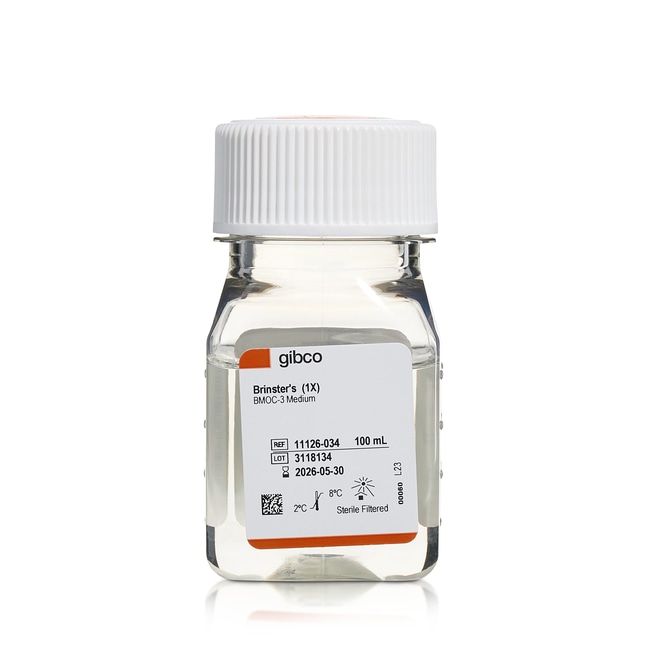
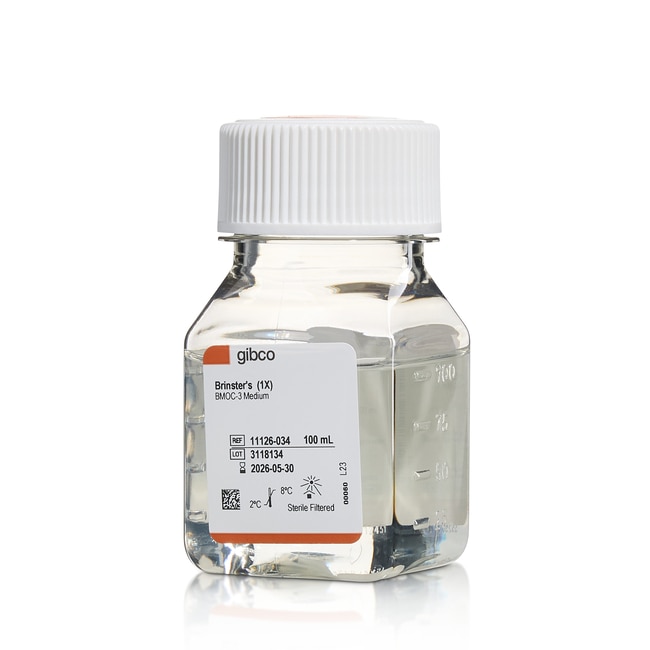
Gibco™ Brinster's, no Glutamine, no phenol red


Description
Brinster's medium for ovum culture (BMOC) is a simple chemically defined media containing bovine serum albumin (BSA) developed by Ralph Brinster for in vitro development of mouse oocytes. This medium is a variation of the original formulation as it does not contain antibiotics. Brinster's medium has also been used for culture of other mammalian embryos during the early stages of development.
This Brinster's medium is manufactured as follows:
With: Bovine Serum Albumin, Sodium Pyruvate
Without: L-glutamine, HEPES, Phenol Red
The complete formulation is available.
Gibco™ Brinster's medium is unique from other media as it contains no amino acids or vitamins. Brinster's medium is supplemented with bovine serum albumin required for supporting oocyte maturation and the early stages of mammalian embryo development and pyruvate as an essential energy source.
Product Use
For Research Use Only: Not intended for animal or human diagnostic or therapeutic use.
Brinster's medium uses a sodium bicarbonate buffer system (2.1 g/L) and therefore requires a 5-10% CO2 environment to maintain physiological pH.
Order Info
Shipping Condition: Room Temperature
Compliance
Gibco Brinster's medium is manufactured at a cGMP compliant facility located in Grand Island, New York. The facility is registered with the FDA as a medical device manufacturer and is certified to ISO 13485 standards
Specifications
Specifications
| Cell Type | Mouse Oocytes |
| Classification | Animal Origin |
| Concentration | 1 X |
| Form | Liquid |
| Product Type | Brinster's Medium |
| Sterility | Sterile-filtered |
| With Additives | Low Glucose, Sodium Pyruvate, Bovine Serum Albumin (BSA) |
| Without Additives | No Glutamine, No HEPES, No Phenol Red |
| Manufacturing Quality | cGMP-compliant under the ISO 13485 standard |
| Product Line | Gibco |
| Show More |
Frequently Asked Questions (FAQs)
Generally speaking, media can be used for up to three weeks after supplementation with serum. There are no formal studies to support this, but it is the rule of thumb used by our scientists.
We routinely ship media that require long-term storage in the refrigerator at room temperature. We have done studies on representative media formulations to show that media can be at room temperature for up to a week without a problem.
Very often mycoplasma contamination cannot be removed from the culture so it should be discarded. You may have a unique culture that you prefer not to discard and would like to try to clean it. Ciprofloxacin and Plasmocin have reportedly been used for this application. If interested in a protocol or directions for use, check with the antibiotic supplier or published literature. Note that mycoplasma are very difficult to remove from culture and spread easily so the treated cultures should be quarantined until clear of mycoplasma, and your laboratory should be thoroughly cleaned.
Try changing the medium or serum. Compare media formulations for differences in glucose, amino acids, and other components. Compare an old lot of serum with a new lot. Increase initial cell inoculums. Lastly, adapt cells sequentially to new medium.
This can occur if cells are overly trypsinized. Trypsinize for a shorter time or use less trypsin. Mycoplasma contamination could also cause this problem. Segregate your culture and test for mycoplasma infection. Lastly, check for attachment factors in the medium.
For Research Use Only. Not for use in diagnostic procedures.