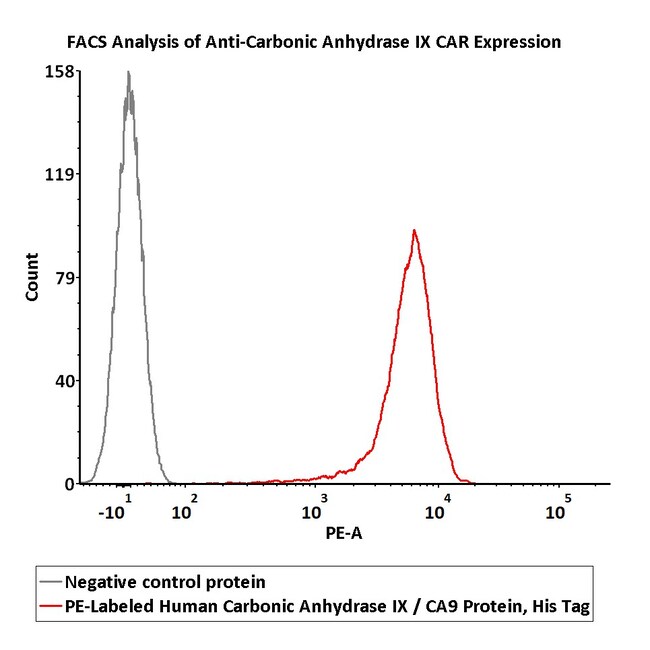
Carbonic anhydrases (CAs) are a large family of zinc metalloenzymes. CAs form a family of enzymes that catalyze the rapid interconversion of carbon dioxide and water to bicarbonate and protons (or vice versa), a reversible reaction that occurs rather slowly in the absence of a catalyst. One of the functions of the enzyme in animals is to interconvert carbon dioxide and bicarbonate to maintain acid-base balance in blood and other tissues, and to help transport carbon dioxide out of tissues. The active site of most carbonic anhydrases contains a zinc ion. There are at least five distinct CA families (, , , and ). Carbonic anhydrase 9 (CA9 / CAIX) is also known as Membrane antigen MN (MN), Renal cell carcinoma-associated antigen G250, which belongs to the alpha-carbonic anhydrase family. CA9 / CAIX with an optimal activity at pH 6.49. Reversible hydration of carbon dioxide.