ACS/ACS réactif/ACS certifié
Anhydre/Sec/Extra-sec
Biochimique
Électronique/Semi-conducteur
FCC
CPG/CPG capillaire
CPG à gradient
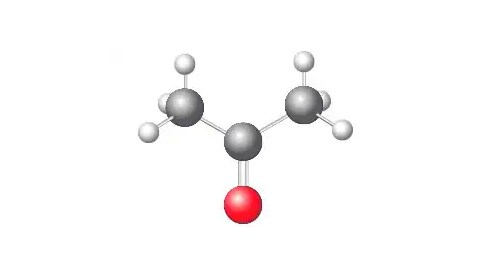
L’acétone est un solvant organique incolore, volatil, et inflammable ayant une odeur sucrée distincte. Elle se trouve naturellement dans les plantes et dans l’environnement et se dissout complètement dans l’eau. Elle ne se lie pas aux sols et ne s’accumule pas dans les organismes aquatiques.
Chez les humains, l’acétone est produite puis rejetée par les processus métaboliques habituels. Produit lors du métabolisme du gras animal, il se trouve en quantités traces dans l’urine et le sang humain. L’acétone peut être détectée dans l’échappement des véhicules ainsi que dans la fumée des volcans, incendies, tabacs, bois, et autres matériaux.
L’exposition aux concentrations modérées ou grandes d’acétone peut provoquer des irritations des yeux, du nez, de la gorge, et des poumons. L’exposition à de grandes ou très grandes concentrations peut provoquer des étourdissements, de la nausée, des mouvements sans coordination, des troubles d’élocution, et un état comateux.
Après analyse approfondie, l’acétone n’est pas classée comme génotoxique, cancérigène, ou neurotoxique. En 1995, elle a été inscrite comme exempte de composés organiques volatils (COV) par l’« Environmental Protection Agency » (EPA).
Synonymes :diméthylcétone, 2-propanone, bêta-cétopropane, propan-2-one, diméthylformaldéhyde, méthyl cétone, éther pyroacétique, diméthylkétal, propane cétonique
| Propriété | Valeur |
|---|---|
Poids moléculaires
|
58,08 g/mol
|
Densité
|
0,7845 g/mL à 25ºC
|
Point d’ébullition
|
56,05ºC
|
Point de fusion
|
-94,7ºC
|
Point d’éclair
|
17ºC
|
Viscosité
|
0,295 cP à 25ºC
|
Constante diélectrique
|
20,7 à 25ºC
|
Moment dipolaire
|
2,91 D
|
Limite UV
|
330 nm
|
Indice de réfraction
|
1,359 à 20ºC
|
Pression de vapeur
|
110 mm Hg (20ºC)
|
Solubilité dans l’eau
|
Miscible
|
Constantes de dissociation
|
-7 pKa (acide conjugué)
|
Tension de surface
|
23,7 dyn/cm à 20ºC
|
L’acétone est utilisée pour la fabrication de plastiques, de fibres, de produits pharmaceutiques, de solvants à peinture, des dissolvants à vernis, et des produits cosmétiques. Elle est aussi utilisée comme solvant pour les gras, les huiles, les cires, les résines, le caoutchouc, les plastiques, les laques, les vernis, et les colles de caoutchouc.
| Propriété | Valeur |
|---|---|
Numéro CAS
|
67-64-1
|
Numéro MDL
|
MFCD00008765
|
Numéro RIDAD/UN
|
UN 1090 3/PG 2
|
Registre Beilstein
|
635680
|
Numéro EG/EC
|
2006622
|
Numéro NSC
|
135802
|
Numéro ICSC
|
0087
|
Numéro RTECS
|
AL3150000
|
ACS/ACS réactif/ACS certifié
Anhydre/Sec/Extra-sec
Biochimique
Électronique/Semi-conducteur
FCC
CPG/CPG capillaire
CPG à gradient
CPG/résidus de pesticides
Histologique
HPLC à gradient
HPLC/UHPLC
Laboratoire/Technique
CPL-SM/Ultra CPL-SM
NF/USP/JP/EP/BP